Sunday, May 10, 2009

Shimbang, sha-bam

This entry is going to be a small break from chronicling my adventures out here in Uijeungbu. Let me present to you: the s(h)imbang, one of a variety of mudang (shamans) in traditional Korean lore.

They're essentially witches. They can communicate with spirits, and they're also well-read in astrology. People will consult with a shimbang about the same things that some Westerners ask Tarot readers or astrology. Belief in superstitions and fortune-telling is more widespread in Korea than in the US, and it's not considered as frivolous or silly. One time I asked Mina how her weekend went, and she said it was good because she went to a fortune-teller, who told her that she had three different romantic prospects in store for her this year. People also go to shimbang for advice in naming their children.

Naming a child is tricky business in Korea (at least for some; I'm not sure what the norm is, I've only heard the naming story behind one Korean). A shimbang has to analyze the family's names, their past deeds and careers, and their birthdays to figure out their elemental make up, and to see where the family is out of balance. Based on this information, the shimbang will recommend a name that will bring the family line back on an even keel. I suspect that this practice is neither a norm nor a rarity, and that it depends on how superstitious the parents are. I can't be entirely sure, though—again, my earlier point about fortune-telling being more "mainstream" here. I imagine the other kinds of mudang can also be consulted about baby names (since shimbang are concentrated mainly south of the Han river), though unlike the shimbang the other mudang contact spirits and deities directly, becoming possessed.

Being a shimbang is a hereditary position, though there are other kinds of mudang where genetics isn't a factor. For whatever reason, when Christianity came to Korea, it was unable to eradicate the mudang—or maybe the converted Koreans saw mudang as compatible with their new faith.

Thursday, May 7, 2009

Survey says...

I mentioned earlier that I got some new classes at Sherlock Academy, higher level conversation/listening classes. One of them meets Mondays and Wednesdays, the other meets Tuesdays and Thursdays. Because this past Tuesday was Children's Day, I didn't have my T/Tr class until today. They're a year younger than my Monday/Wednesday class, and they were much more eager to talk to me.

"Teacher! What's your name?"

"Katherine."

And again, the "th" dipthong proved to be their undoing. "Kasserine," they murmured, much like my brother used to pronounce my name. ("Kasserine" is actually how you write it in Hangul, since there's no character for "th.") I made a half-hearted attempt at being a "Kate" but no dice. All the better, I'm quite attached to my long-ass English name.

"Where are you from?"

"Philadelphia."

"Where's that?"

"Pennsylvania, in the United States."

"Ah, okay."

And then: "Teacher! Park Chan-ho team!"

"Yeah, Park Chan-ho team, that's right. World Series champs!"

(Aside: apparently the two American baseball teams that get reliable coverage here are the Indians and the Phillies, courtesy of Korea's two big baseball superstars.)

One of my students had a White Sox cap, which I pointed out.

"White Sox fan?"

"Yeah, Chicago."

Which surprised me, I thought the popularity of White Sox hats here was largely due to the artsy look of the logo and not because anyone actually liked them. I think of the White Sox as being one of the more obscure MLB teams.

"Do you have Korean name?"

"No, no one's given me one yet!"

A boy with the English name Edward suggested 유사, or Yusa, but no one really seemed enthusiastic about it. Then I got an idea.

"My last name in English," I said, and wrote 꼬바 on the board.

"Kasserine Koba," some of them murmured.

"So is Koba a good Korean name? Can I use that?"

"Sure."

So now I have a Korean name. I guess.

Before I did any of the planned activities, I had them fill out little surveys to give to me, to help me learn their names and also get a sense of what they were like. So precious! Here are some of the best ones:

Introduce me about every thing!
Hello! My name is Jong so-hee, English name is Winne [sic]. I like food and listen to music. My favorite subject is social studies.


1. Korean Name: 뱨석ㅎᅳᅵ (Bae Suk Hee)
2. English Name: forum [sic]
3. Interests/hobbies: basketball
4. Favorite subject: P. E., English, Social Study, Science


My Korean name: 김민강 [Ed. Note: Kim Min Kang]
My English name: Dan
My hobby is play soccer or baseball
My favorite subject is math and P.E.


1. Korean Name: Kim min sik (김민식)
2. English name: Steven
3. Interests/hobby: jumping rope, soccer
4. Favorite subject: sciense [sic]


I also have another student named "Hey," and a girl named "Teeny." They speak English better than my other students, but they still can't all spell their names. Worrisome.

Tuesday, May 5, 2009

It's a beautiful day in the neighborhood...

I had the day off today, courtesy of Children's Day. I took advantage of this break and went on a photo safari:


Preparing fish at a restaurant.


There don't seem to be any "good" or "bad" neighborhoods in Minlak-dong. Everything just kind of mish-mashes together. This broken-down little place is a five minute walk from my apartment; you can see pockets of tin-roofed shanty-looking houses behind the restaurants on the main drag.


Someone's garden, across the street from the above photo. I'm not sure what they're growing, but you see small fields just like this one all over the place. I imagine gardens like this is where all the back-of-truck produce in Korea comes from.


This wasn't in my contract.

Sherlock Academy decided it would offer another round of classes—listening and conversation classes for "middle school" students looking to enter a foreign language high school. (Note well that "middle school" students here are older than the ones in the US.) What was once my free period at the end of the day to mark tests and plan lessons is now spent with awkward, pimply Korean pubescents. The plus is that they already speak some English, and speak better than the rest of my students. A Korean I talked to last weekend at a language exchange said that kids who go to foreign language high schools are usually pretty smart, and I'd agree: they absolutely demolished the listening exercises and finished so quickly that I didn't know what else to do.


The problem is that the class doesn't start until 7.50 PM, when they've already been in classes all day. None of them want to speak, none of them have any energy, they're pretty much just zombies by this point. Which makes my job pretty awkward, to say the least. I was excited about the possibility of actually having a meaningful conversation with my students but it looks like that's not going to happen right away. I tried to ask them about their weekends but they gave me really lame answers; a full three-quarters of the class played video games. No Starcraft, though, contrary to popular belief.

I share the class with a middle school teacher (Sherlock Academy is sort of a joint venture; Sherlock teaches English and its sister school [let's call it Watson Academy] teaches pretty much everything else) and he was kind(?) enough to tell me that one of the students was upset to learn that his teacher was going to be a woman. Yeah. This country. Of course, I did have another student earlier in the year who seemed equally distressed by my foreignness, but now he seems to have warmed to me, so we'll see how this goes.

Sunday, May 3, 2009

Buddha's Birthday

The religious stats in Korea breakdown as such: about 25% Christian (of whatever denomination, Catholicism included), 25% Buddhist, and 50% apathetic/agnostic. Buddhist and Christian holidays, therefore, carry the same amount of weight. Buddha's birthday—the eighth day of the fourth lunar month—is a government holiday which normally means you get off of work. But when a holiday falls on a weekend, no dice: no token Friday or Monday off, you celebrate the holiday just on the holy day in question.

Saturday was Buddha's birthday (부처님 오신 날 or 석가탄신일, "the day of Buddha's birthday" or "the day that Buddha arrived"). For the past couple weeks, places have been preparing by stringing up paper lanterns:


They're not quite everywhere, mostly at the Buddhist temples (of which there are two along the bus route I take to the subway station) and also outside a few of the stores and restaurants, presumably the ones owned and operated by Buddhists. They look dingy by day, but at night when they're lit up it's a sight to behold—like giant Christmas lights. Traditionally, temples offer free food and tea all day on 부처님 오신 날, but I didn't learn this until it was too late for me to go try and still make it Seoul in time for the language exchange I found. Alas.

"All you white people look the same!"

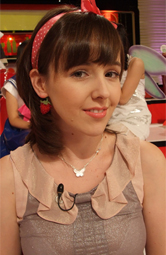
Some Korean women at the language exchange in Seoul told me that I looked like a woman from a KBS program called "Global Talk Show: Chatting With Beauties" or something like that. They might have mixed up the names—this is the woman with the name they mentioned:


(Annabelle Ambrose)

But looking at the women on the show, I think they meant this one:


(Melissa Alonzo)

Either that or they just noticed that I have the same haircut as the first one.

Saturday, May 2, 2009

Geek moment

I JUST SAW THIRST AND YOU DIDN'T BECAUSE YOU'RE NOT IN KOREA.


SUCKERS!!